
UPI processed an average 802 million transactions a day in September, about 1 per cent more than the 792 million a day over the same period in August.

Former NITI Aayog vice-chairman Rajiv Kumar has urged the government to maintain zero-fee UPI transactions for several more years, arguing that the benefits of UPI as a public good outweigh the costs. This comes amidst the government's recent decision to introduce a 0.4% fee on person-to-merchant UPI transactions above Rs 2,000 from October 15, a move that has drawn criticism.

The Finance Ministry has refuted allegations that US pressure influenced the decision to levy a 0.4 per cent Merchant Discount Rate (MDR) on select UPI payments. The ministry clarified that the NPCI guidelines prioritise RuPay credit cards on UPI to promote domestic alternatives and ensure a self-sustaining revenue model for smaller domestic companies, countering claims of favouring foreign payment providers.

'UPI has been free since Covid, so why is the government charging us now?'
ICICI Bank is seeking recoveries of at least 100 crore from fintech firms, alleging merchant misclassification of their business, a practice that has eroded the bank's interchange income. The dispute, lodged with global card network Visa, highlights growing discomfort among banks and intensified scrutiny from the Reserve Bank of India.

The Indian government has mandated that banks and payment providers cannot levy charges on UPI transactions up to Rs 2,000 or on payments made via RuPay debit cards. This directive follows an amendment to the Payment and Settlement Systems Act, 2007, aiming to sustain and expand the digital payments ecosystem.

Former Haryana Chief Minister Bhupinder Singh Hooda has criticised the newly introduced fees on UPI payments, stating they will lead to increased inflation for the common man. He dismissed government claims that customers would not be burdened, arguing that merchants would pass on the costs. Hooda demanded the immediate withdrawal of these fees, highlighting that the government's move contradicts its 'Digital India' initiative.

The Indian government has clarified that consumers will not be charged for UPI transactions, and most merchant transactions will also remain free. This comes amidst speculation following an amendment to the Payment and Settlement Systems Act, 2007. Any future merchant discount rate (MDR) would be nominal, threshold-based, and aimed at ensuring UPI's long-term sustainability and infrastructure development.

The central government has introduced a 0.4 per cent fee on UPI transactions exceeding Rs 2,000, prompting traders' associations to advocate for cash payments to avoid additional costs on digital payments. This move ends the zero-Merchant Discount Rate (MDR) regime, with traders expressing concerns about operating on tight margins and the potential for increased charges.
The BJP has accused the Congress of spreading "fake news" regarding UPI transaction charges, asserting that the government has clarified that consumers will not be levied merchant discount rate (MDR) charges. This comes after the Congress criticised a government notification, alleging it paves the way for imposing fees on UPI transactions. The BJP has strongly refuted these claims, highlighting that most UPI transactions remain free and the government provides incentives to maintain a charge-free ecosystem for users.

A think tank, GTRI, has urged India to resist US pressure regarding its UPI policies, advocating for the defence of competition, policy autonomy, and the long-term sustainability of its payments ecosystem. This comes as the Lok Sabha passed a bill allowing charges on UPI transactions, a move GTRI suggests should not be influenced by foreign trade complaints.

The Indian government has introduced a 0.4% fee on UPI transactions above Rs 2,000 for merchants, effective October 15, sparking strong opposition from political parties and traders. Despite accusations of foreign influence and demands for a rollback, the finance ministry and top functionaries have stated there will be no reversal, citing the need for a self-sustaining digital payments ecosystem.
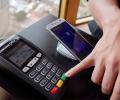
The opposition has intensified its criticism of the government's decision to impose a 0.4 per cent Merchant Discount Rate (MDR) on UPI transactions above Rs 2,000, effective October 15. Leaders like Rahul Gandhi and Jairam Ramesh allege the move is a result of US pressure, particularly from American card companies, and demand an immediate rollback, warning of increased costs for consumers.

If the new MDR regime is rolled out from the middle of this month, as scheduled, it should count as one of the boldest political actions by the Modi government on an economic-policy issue, and a signal that it is less worried about erosion of political capital it draws from one of its key constituencies, notes A K Bhattacharya.

The Congress party has accused the Indian government of imposing new charges on UPI transactions due to pressure from the United States, specifically to benefit American card companies. The opposition party demanded the withdrawal of the decision, calling it "anti-national" and alleging it fills the coffers of US firms while burdening Indian citizens. The government, however, clarified that the Merchant Discount Rate (MDR) charges apply only to commercial transactions above Rs 2,000 and are not levied on consumers, a stance supported by the BJP which accused Congress of spreading "fake news".

Making UPI payments fee-based for some transactions could enhance mental reservations against digital payments -- which have largely been overcome -- once more. Do we want to regress?, asks R Jagannthan.
One 97 Communications Ltd, operating Paytm, is set to issue its first bonus shares, following a landmark year of achieving its maiden full-year profit and gaining significant market share. The board will meet on July 20 to decide on the bonus issue, reflecting confidence in its financial strength and aiming to improve stock accessibility for retail investors.

Digital money is gradually starting to behave like software. It's no longer inert -- sitting passively in accounts. In the not-so-distant future, your money could become 'smart' and 'active,' understanding your preferences, paying your bills automatically, optimising your returns, and managing your risks -- all without you having to manage the details.

This would imply a 29 per cent year-on-year rise, significantly lower than growth rates seen in recent years.

As India's biggest Unified Payments Interface (UPI) app PhonePe prepares to list, the updated draft red herring prospectus (DRHP) shows the impact of regulations on the business, and concentration of payments-linked revenue even as UPI lacks MDR (merchant discount rate).

'The introduction of a reasonable MDR for large merchant transactions will allow the industry to continue investing in innovation, cybersecurity, grievance redressal, and merchant support, ultimately ensuring that UPI continues to thrive.'
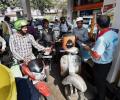
Credit card payments to buy fuel at petrol pumps will from October 1 not get a 0.75 per cent discount that State-owned oil companies had introduced more than two-and-a-half years back to promote digital payments.
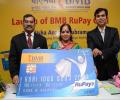
There will be no charge for RuPay credit card use on Unified Payments Interface (UPI) for transactions up to Rs 2,000 in line with the RBI direction, a recent NPCI circular said. RuPay credit card has been operational for the last four years, and all major banks are enabled and are issuing incremental cards for both commercial and retail segments. "During credit card on-boarding on the apps, the device binding and UPI PIN setting process shall include and be construed as customer consent for credit card enablement for all types of transactions," the circular dated October 4 said.

'When you think of cross-border payments, the first things that come to mind are risk, compliance, taxation, speed, and cost.'

'The only solution is for the government to allow us to charge a low controlled MDR of 25 bps on UPI P2M transactions only for merchants with more than a Rs 40 lakh turnover.'
Several executives argue that UPI has the potential to grow tenfold, but warn that the absence of a monetisation model risks stagnating the real-time payments system, which has been recording all-time-high transaction volumes every year.

New-age stocks to buy: Most new-age stocks have turned out to be wealth destroyers in stock markets, so far, in calendar year 2025. Shares of Ola Electric Mobility, for instance, have plunged nearly 50 per cent in the first half of CY 2025, while those of Swiggy, PB Fintech, Paytm, and Eternal (Zomato) have crashed between 6 per cent and 25 per cent, ACE Equity data shows.

In 2024, the National Payments Corporation of India (NPCI) approved 20 third-party Unified Payments Interface (UPI) applications, a record since UPI's launch in 2016. This surge reflects growing interest from financial technology (fintech) companies, driven by the integration of credit products like UPI-linked credit cards and pre-approved credit lines.
The Reserve Bank of India's (RBI's) recent decision to allow credit cards for payments through the Unified Payments Interface (UPI) is likely to attract a merchant discount rate (MDR), said a top payment industry source. For smaller merchants, a subsidy for MDR could be provided. "With credit card-UPI linkage, UPI will not only be a payment instrument but also a lending platform. "How can banks lend without a commercial model? Also, the government has said MDR will be zero for payment products but not for lending products," the source said, indicating the MDR regime for credit card-linked UPI payments.

The finance minister's meeting with chief executives and managing directors of banks ahead of the Union Budget assumes significance in view of the critical role the banking sector plays in boosting consumer demand across sectors.

The Paytm application (app) could potentially face a permanent loss of its integrated mobile wallet feature, currently owned by Paytm Payments Bank (Paytm PB). With the recent crackdown on Paytm PB, sources say getting a fresh wallet licence may get tough for the group. "The Paytm app (One97 Communications) has to apply afresh to the RBI for a licence to operate a prepaid payment instrument (PPI) like a mobile wallet within the Paytm app, as PPI is a regulated entity.

Sitharaman said surcharges on individuals having taxable income of Rs 2 crore to Rs 5 crore; and Rs 5 crore and more have been raised.
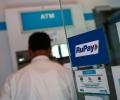
Recent RBI data indicates net addition of credit cards is running strong at 18 per cent year-on-year (Y-o-Y), but growth in credit card limits is ahead of loans outstanding. Growth in lower limit cards is decelerating fastest. The West and South have more usage and online transactions are more popular than offline, with metros leading growth.

The Centre on Sunday said there are no plans to levy charges for making payments through Unified Payments Interface (UPI) while saying the service is a "digital public good with immense convenience". The ministry of finance said the concerns of service providers for cost recovery have to be met through other means. "UPI is a digital public good with immense convenience for the public & productivity gains for the economy.

Those who have binged on credit must spend less, cut discretionary expenses, and focus on repayment.

'The Indian consumer is moving so quickly and they have so many options.'

A large number of people using cards at PoS Cards being used more frequently Small-ticket transactions Mastercard South Asia head Porush Singh calls these the three key trends for a cashless future. And post-demonetization India, he believes, is steadily moving towards it.

Before signing up for a BNPL plan, read the fine print carefully and watch for red flags like unclear repayment terms, vague information on interest or late fees, and marketing that downplays the cost of default.

The prime minister initiated the discussion on the move, which was announced last month, with the ministers after the meeting of the Union Cabinet ended in New Delhi.

Shares of One97 Communications (OCL), which provides financial services under the brand 'Paytm', and has a banking arm Paytm Payments Bank (PPBL), hit the 5 per cent upper circuit at Rs 428.10 on the National Stock Exchange (NSE) in Monday's (February 26) intraday trade. The up move in the stock on Monday came after the Reserve Bank of India (RBI) asked the National Payments Corporation of India (NPCI), in post stock market hours, to look into the possibility of migrating PPBL customers, using the UPI handle '@paytm', to four-to-five other banks.
